Fresh reads, guest voices & new ideas November 5, 2026
More recent posts

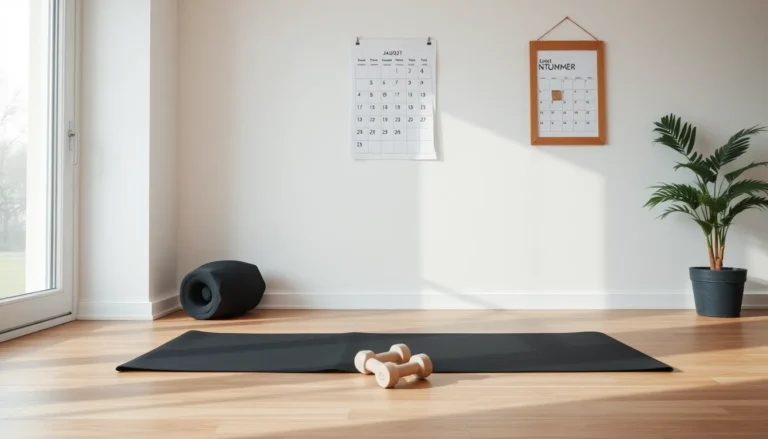
How to Create a Simple Home Workout Plan That Sticks

by wpxgre3r06u4xb8w7 min read

If you have limited space, minimal equipment, and a history of abandoned gym memberships, this guide is for you. It moves beyond generic exercise lists to address the core challenge: maintaining Consistency without relying on external motivation. You will learn how to design a realistic Home Workout Plan that fits your actual life, not an idealized version of it.

The focus here is on behavioral sustainability. By prioritizing Compound Movements and understanding Progressive Overload, you can build strength and endurance effectively. You will get a structured framework for selecting exercises, managing Rest Periods, and ensuring your Form remains safe and effective, all with minimal gear.

Define Your Goal and Constraints

Before selecting a single movement, you must audit your actual lifestyle. A workout plan that requires forty-five minutes of uninterrupted floor space is useless if you only have twenty minutes during a lunch break. Start by identifying the realistic time you can dedicate per session. Consistency matters more than duration. A twenty-minute session performed five times a week is infinitely more effective than a one-hour session attempted once.

Next, assess your physical constraints. What space is available? Do you have a clear area large enough to perform Compound Movements like squats or push-ups safely? What equipment is already present? You do not need a full rack of dumbbells. A pair of adjustable dumbbells, a resistance band, and your own body weight are sufficient to build significant strength. If you have no equipment, bodyweight exercises are a viable starting point.

Finally, clarify your primary objective. For most beginners, the goal is not immediate aesthetic change. The goal is establishing a habit. You are building the neurological and behavioral pathways for Consistency. Choose a schedule you can maintain for at least eight to twelve weeks. If you plan to work out at 6:00 AM but cannot sustain that early start, the plan will fail. Align your routine with your natural energy levels and weekly obligations. This initial alignment ensures that the framework remains sustainable, allowing you to focus on proper Form and gradual progression without the friction of missed sessions or logistical barriers.

Selecting the Right Exercises

When space and equipment are limited, efficiency is paramount. Prioritize Compound Movements that engage multiple muscle groups simultaneously. These exercises deliver more physiological benefit per minute compared to isolation movements, which target single joints. For a home setting, this efficiency reduces total workout duration while maximizing full-body adaptation. You do not need complex machines to build strength; you need movements that mimic natural human motion.

Focus on these foundational actions to build a robust base:

  • Squats: Targets the quadriceps, hamstrings, and glutes. Use bodyweight or hold a backpack for added resistance.
  • Push-Ups: Builds chest, shoulders, and triceps while engaging the core for stability.
  • Rows: Essential for posture and upper back strength. Perform using a heavy backpack or a towel under a sturdy doorframe.
  • Planks: Develops core stability and endurance, protecting the lower back during other movements.
  • Lunges: Improves unilateral leg strength and balance, addressing muscle imbalances.
  • Overhead Press: Strengthens the shoulders and upper arms, completing the major movement patterns.

Adjust the difficulty to match your current capability. If standard push-ups compromise your Form, perform them on your knees or against an elevated surface like a counter. Conversely, if a movement feels too easy, slow down the tempo or increase the load. The goal is to maintain strict Form at every stage. Proper execution prevents injury and ensures that the targeted muscles are doing the work, not compensatory joints. Start with the version you can perform with control, then progress as your strength allows.

Structuring the Session: Sets, Reps, and Rest

Once you have chosen your Compound Movements, you need to define the volume and intensity. A “set” is a continuous series of repetitions performed before a break. A “rep” (repetition) is one complete movement. For beginners, a standard structure of three sets of eight to twelve reps per exercise is ideal. This range balances muscular endurance with strength development without causing excessive fatigue.

Rest periods are the pause between sets. For home workouts, sixty to ninety seconds is a practical window. This duration allows your heart rate to lower and your muscles to partially recover, ensuring you can maintain strict Form on the next set. If you rest too long, you lose the metabolic stress; if you rest too short, your technique suffers, increasing injury risk. Use a timer to keep these intervals consistent.

You have two main ways to sequence these exercises: straight sets or circuits. In straight sets, you complete all three sets of one exercise before moving to the next. This approach prioritizes strength and allows for adequate recovery. Circuits involve performing one set of each exercise back-to-back with minimal rest, then resting after the full round. This raises your heart rate and improves cardiovascular conditioning. For long-term Consistency, alternate between these styles. Use straight sets on heavier compound days and circuits on lighter, full-body maintenance days to keep the routine engaging and sustainable.

Implementing Progressive Overload at Home

The most common barrier to long-term adherence in a home setting is the belief that progress requires heavier weights. Without a rack of dumbbells or barbells, many people hit a plateau and assume their routine has stopped working. This is a misconception. Progressive Overload is not defined solely by external load; it is defined by increasing the demand placed on your muscles over time. You can achieve this effectively with bodyweight exercises or minimal equipment by manipulating variables other than weight.

One of the most effective methods is increasing the number of repetitions. If you currently perform ten push-ups with perfect Form, aim for eleven or twelve next week. Once that becomes easy, move to the next variable: slowing down the tempo. Instead of a standard push-up, take three seconds to lower your body and one second to push up. This increases time under tension, forcing your muscles to work harder even without added weight.

Another powerful tool is reducing Rest Periods. If you typically rest for sixty seconds between sets, try cutting that to thirty. This maintains the total volume of work while improving muscular endurance and cardiovascular conditioning. You can also add an isometric pause at the bottom of the movement. Holding a deep squat or the bottom of a lunge for two to three seconds eliminates momentum and significantly increases difficulty.

These adjustments allow you to keep challenging your body indefinitely. By rotating these variables—reps, tempo, rest, and pauses—you ensure that your muscles continue to adapt. This approach removes the need for expensive equipment upgrades and keeps the routine manageable. Consistency in applying these small, incremental changes is what drives long-term strength and endurance gains, making your home workouts sustainable and effective for years to come.

Building Consistency and Tracking Progress

Tracking is the bridge between intention and action. Without a record, you cannot measure progress or adjust your plan effectively. The goal is to create a system that is so low-friction it feels effortless, removing the mental barrier to starting your session.

You do not need a complex app or a dedicated notebook. A simple phone notes app or a small paper journal is sufficient. After each workout, jot down the exercises, the number of sets, and the rep counts. Keep it brief. The act of writing down what you did reinforces the behavior and creates a tangible history of your efforts.

Seeing these numbers over time provides immediate feedback. When you return to a previous entry and notice an increase in reps or a decrease in Rest Periods, it serves as concrete proof of adaptation. This visual evidence of Progress is a powerful motivator, especially during weeks when physical gains feel slow.

However, motivation is an unreliable engine. On days when you feel uninspired, do not focus on the outcome of the workout. Instead, focus on the habit itself. Show up. Complete the minimum viable session. Your identity as someone who exercises is built through repetition, not through peak performance days. If you miss a day, do not abandon the log. Simply resume the next day. Consistency is not about perfection; it is about returning to the routine after a break.

By keeping your tracking simple and your focus on showing up, you remove the friction that often leads to quitting. The data points you collect are not just numbers; they are evidence that your routine is working. This sense of ownership over your progress ensures that your home workout plan remains a sustainable part of your daily life, rather than a fleeting experiment.

Practical Steps to Improve Indoor Air Quality at Home

by wpxgre3r06u4xb8w7 min read

If your home feels stuffy or you notice dust settling quickly, you are likely dealing with common indoor pollutants. This guide cuts through the marketing noise to explain how to improve indoor air quality at home by targeting the root causes. You do not need expensive gadgets or complex systems to make a real difference.

Instead of relying solely on filters, you will learn to identify specific sources of Volatile Organic Compounds (VOCs) and Particulate Matter. By focusing on Source control and proper Ventilation, you can significantly reduce your exposure to these irritants. The goal is simple: eliminate the problem at its origin rather than just cleaning it up after the fact.

Identify the Main Sources of Indoor Pollution

Indoor air quality often lags behind outdoor conditions due to the accumulation of pollutants in enclosed spaces. Before purchasing new equipment, you must first understand where these contaminants originate. Identifying the specific source is the critical first step toward meaningful improvement. Without this knowledge, any intervention remains a guess.

Common culprits in your home include:

  • Cooking Fumes: Stove use releases significant amounts of Particulate Matter and combustion byproducts, especially when frying or grilling indoors.
  • Cleaning Products: Aerosol sprays and harsh chemicals emit Volatile Organic Compounds (VOCs) that linger in the air long after use.
  • Tobacco Smoke: Smoke contains thousands of chemicals that settle into fabrics and walls, creating a persistent reservoir of pollutants.
  • Pet Dander: Tiny flakes of skin and fur from animals are a primary source of airborne allergens.
  • Dust Mites: These microscopic organisms thrive in bedding and carpets, contributing to ongoing Particulate Matter levels.
  • Off-Gassing Materials: New furniture, carpets, and paints release VOCs over time, particularly in the first few months.

Take a moment to walk through your home with a critical eye. Note which rooms feel stuffy or where you notice strong odors. By pinpointing these specific sources, you can target your Source control efforts effectively. This diagnostic phase ensures that your subsequent actions address the root cause rather than merely masking symptoms. Once you have mapped out the primary contributors, you are ready to implement targeted solutions.

Prioritize Source Control Over Filtration

Filtering air is reactive; Source control is proactive. Removing a pollutant at its origin is fundamentally more effective than trying to capture it after it has dispersed. An air cleaner must process air continuously to keep up with ongoing emissions, whereas eliminating the source stops the problem entirely. This approach reduces the load on your ventilation system and prevents secondary reactions that can create new compounds.

Start with high-impact changes in high-emission zones. When cooking, always run your exhaust fan to vent steam and combustion byproducts directly outside. In cleaning routines, switch to low-VOC or no-VOC products. Conventional cleaners release Volatile Organic Compounds that linger in the air long after the surface is dry. Similarly, dust accumulation contributes to Particulate Matter levels. Vacuum frequently using a machine equipped with a HEPA filter to trap fine particles rather than recirculating them into the room.

Behavioral changes also play a critical role. Avoid smoking indoors, as cigarette smoke contains thousands of chemicals that settle into fabrics and walls. By focusing on these preventative measures, you address the root cause of poor air quality. This strategy is often lower cost and more efficient than relying solely on mechanical filtration to manage a constantly replenished pollutant load.

Optimize Ventilation and Air Exchange

Fresh air dilution is the most straightforward method to lower the concentration of Volatile Organic Compounds (VOCs) and Particulate Matter inside your home. Mechanical systems like HVAC units recirculate air, which can trap pollutants if not managed correctly. Regularly replacing HVAC filters prevents dust buildup, ensuring the system operates efficiently and does not push stale, contaminated air back into living spaces.

Natural ventilation offers a powerful alternative when outdoor conditions permit. Opening windows in two different rooms on opposite sides of the house creates cross-ventilation, actively pulling fresh air through and expelling stale air. This technique is particularly effective for removing cooking odors and cleaning product fumes. However, you must monitor local weather and air quality. On days with high pollen counts, wildfire smoke, or heavy traffic smog, keep windows closed to avoid introducing external Particulate Matter indoors.

Use exhaust fans in kitchens and bathrooms to directly remove moisture and specific pollutants at the source. Run these fans during cooking and showering, and continue for a few minutes afterward to clear residual humidity. Balancing these strategies ensures you maintain healthy air exchange without sacrificing protection from outdoor hazards.

Manage Humidity to Prevent Mold and Dust Mites

Humidity control is critical because biological pollutants like mold and dust mites thrive in moist environments. When relative humidity rises, these organisms multiply rapidly, releasing spores and allergens that degrade air quality and trigger respiratory issues. Conversely, air that is excessively dry can irritate mucous membranes and increase static electricity, making dust particles more airborne. The goal is to maintain a stable relative humidity between 30% and 50%. This range inhibits mold growth and dust mite reproduction while keeping the air comfortable for human health.

To achieve this balance, apply targeted interventions in areas prone to moisture. Use dehumidifiers in basements, laundry rooms, or bathrooms where humidity naturally accumulates. Regularly clean the filters and empty water reservoirs to ensure the equipment functions effectively and does not become a source of contamination. Address leaks promptly; even minor water intrusion from pipes or roofs can create hidden pockets of dampness that foster mold colonies. Ensure laundry dries completely within the dwelling by using dryers or dedicated drying spaces, as wet clothes release significant amounts of moisture into the air. By managing humidity levels, you directly reduce the biological load in your home, complementing your efforts in source control and ventilation.

When to Use Air Purifiers and How to Choose Them

Think of air purifiers as a safety net, not the foundation. They capture pollutants that slip past your primary efforts in source control and ventilation. If you have successfully eliminated the source—such as switching to low-VOC paints or sealing leaks—a purifier becomes less critical. However, if you live near heavy traffic or cannot fully control internal emissions, a unit can lower the concentration of Particulate Matter and Volatile Organic Compounds (VOCs) in the air.

Focus on two core components when selecting a device. Look for a True HEPA filter to trap fine particles like dust, pollen, and pet dander. Pair this with an activated carbon filter, which is essential for absorbing gases, odors, and specific VOCs that HEPA filters cannot capture. Avoid units that rely solely on ionizers or ozone generators. These technologies can produce secondary pollutants that irritate the respiratory system, potentially worsening indoor air quality rather than improving it.

Sizing is often overlooked but crucial for performance. A unit rated for a much larger space than your actual room will run inefficiently, failing to exchange the air enough times per hour to make a meaningful difference. Match the manufacturer’s recommended coverage area to your specific room dimensions. If a single room is too large for one unit, consider using two smaller units or ensuring the device is placed centrally to maximize airflow circulation across the living space.

Maintain a Clean and Healthy Living Environment

Consistent maintenance habits prevent pollutants from accumulating. Replace HVAC filters according to the manufacturer’s schedule to ensure the system captures Particulate Matter effectively without clogging. Wash bedding in hot water regularly to eliminate dust mites, which thrive in warm, humid environments. Keep surfaces dust-free by using damp cloths or microfiber mops rather than dry sweeping, which can kick dust back into the air.

Manage pet grooming by brushing animals outside or in a well-ventilated area to minimize the spread of dander. While indoor plants can add a slight positive effect to the living environment, they are not a primary solution for air purification. Instead, focus on eliminating sources of Volatile Organic Compounds (VOCs). Avoid scented candles and synthetic air fresheners, as these products release chemical compounds that degrade air quality. Opt for ventilation or unscented cleaning agents to maintain a healthy atmosphere without introducing new irritants.

Humidity control remains critical in this routine. Monitor moisture levels to prevent mold growth, which releases spores that aggravate respiratory issues. By combining regular cleaning, proper pet care, and the elimination of chemical emitters, you create a sustainable baseline for clean air that complements your ventilation and source control strategies. This ongoing discipline ensures that your efforts to improve indoor air quality are durable and effective over time.