How to Create a Simple Home Workout Plan That Sticks

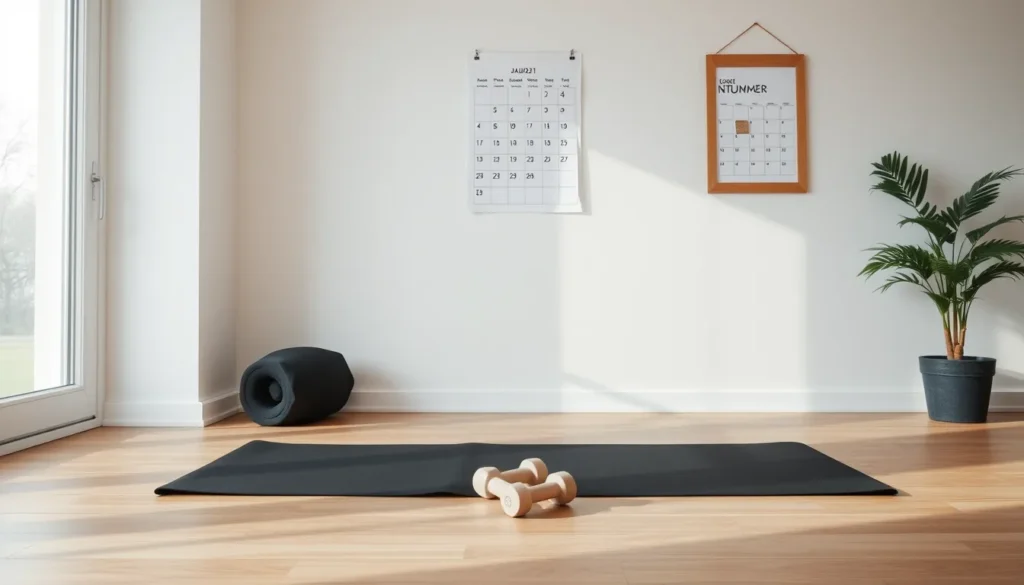
If you have limited space, minimal equipment, and a history of abandoned gym memberships, this guide is for you. It moves beyond generic exercise lists to address the core challenge: maintaining Consistency without relying on external motivation. You will learn how to design a realistic Home Workout Plan that fits your actual life, not an idealized version of it.
The focus here is on behavioral sustainability. By prioritizing Compound Movements and understanding Progressive Overload, you can build strength and endurance effectively. You will get a structured framework for selecting exercises, managing Rest Periods, and ensuring your Form remains safe and effective, all with minimal gear.
Define Your Goal and Constraints
Before selecting a single movement, you must audit your actual lifestyle. A workout plan that requires forty-five minutes of uninterrupted floor space is useless if you only have twenty minutes during a lunch break. Start by identifying the realistic time you can dedicate per session. Consistency matters more than duration. A twenty-minute session performed five times a week is infinitely more effective than a one-hour session attempted once.
Next, assess your physical constraints. What space is available? Do you have a clear area large enough to perform Compound Movements like squats or push-ups safely? What equipment is already present? You do not need a full rack of dumbbells. A pair of adjustable dumbbells, a resistance band, and your own body weight are sufficient to build significant strength. If you have no equipment, bodyweight exercises are a viable starting point.
Finally, clarify your primary objective. For most beginners, the goal is not immediate aesthetic change. The goal is establishing a habit. You are building the neurological and behavioral pathways for Consistency. Choose a schedule you can maintain for at least eight to twelve weeks. If you plan to work out at 6:00 AM but cannot sustain that early start, the plan will fail. Align your routine with your natural energy levels and weekly obligations. This initial alignment ensures that the framework remains sustainable, allowing you to focus on proper Form and gradual progression without the friction of missed sessions or logistical barriers.
Selecting the Right Exercises
When space and equipment are limited, efficiency is paramount. Prioritize Compound Movements that engage multiple muscle groups simultaneously. These exercises deliver more physiological benefit per minute compared to isolation movements, which target single joints. For a home setting, this efficiency reduces total workout duration while maximizing full-body adaptation. You do not need complex machines to build strength; you need movements that mimic natural human motion.
Focus on these foundational actions to build a robust base:
- Squats: Targets the quadriceps, hamstrings, and glutes. Use bodyweight or hold a backpack for added resistance.
- Push-Ups: Builds chest, shoulders, and triceps while engaging the core for stability.
- Rows: Essential for posture and upper back strength. Perform using a heavy backpack or a towel under a sturdy doorframe.
- Planks: Develops core stability and endurance, protecting the lower back during other movements.
- Lunges: Improves unilateral leg strength and balance, addressing muscle imbalances.
- Overhead Press: Strengthens the shoulders and upper arms, completing the major movement patterns.
Adjust the difficulty to match your current capability. If standard push-ups compromise your Form, perform them on your knees or against an elevated surface like a counter. Conversely, if a movement feels too easy, slow down the tempo or increase the load. The goal is to maintain strict Form at every stage. Proper execution prevents injury and ensures that the targeted muscles are doing the work, not compensatory joints. Start with the version you can perform with control, then progress as your strength allows.
Structuring the Session: Sets, Reps, and Rest
Once you have chosen your Compound Movements, you need to define the volume and intensity. A “set” is a continuous series of repetitions performed before a break. A “rep” (repetition) is one complete movement. For beginners, a standard structure of three sets of eight to twelve reps per exercise is ideal. This range balances muscular endurance with strength development without causing excessive fatigue.
Rest periods are the pause between sets. For home workouts, sixty to ninety seconds is a practical window. This duration allows your heart rate to lower and your muscles to partially recover, ensuring you can maintain strict Form on the next set. If you rest too long, you lose the metabolic stress; if you rest too short, your technique suffers, increasing injury risk. Use a timer to keep these intervals consistent.
You have two main ways to sequence these exercises: straight sets or circuits. In straight sets, you complete all three sets of one exercise before moving to the next. This approach prioritizes strength and allows for adequate recovery. Circuits involve performing one set of each exercise back-to-back with minimal rest, then resting after the full round. This raises your heart rate and improves cardiovascular conditioning. For long-term Consistency, alternate between these styles. Use straight sets on heavier compound days and circuits on lighter, full-body maintenance days to keep the routine engaging and sustainable.
Implementing Progressive Overload at Home
The most common barrier to long-term adherence in a home setting is the belief that progress requires heavier weights. Without a rack of dumbbells or barbells, many people hit a plateau and assume their routine has stopped working. This is a misconception. Progressive Overload is not defined solely by external load; it is defined by increasing the demand placed on your muscles over time. You can achieve this effectively with bodyweight exercises or minimal equipment by manipulating variables other than weight.
One of the most effective methods is increasing the number of repetitions. If you currently perform ten push-ups with perfect Form, aim for eleven or twelve next week. Once that becomes easy, move to the next variable: slowing down the tempo. Instead of a standard push-up, take three seconds to lower your body and one second to push up. This increases time under tension, forcing your muscles to work harder even without added weight.
Another powerful tool is reducing Rest Periods. If you typically rest for sixty seconds between sets, try cutting that to thirty. This maintains the total volume of work while improving muscular endurance and cardiovascular conditioning. You can also add an isometric pause at the bottom of the movement. Holding a deep squat or the bottom of a lunge for two to three seconds eliminates momentum and significantly increases difficulty.
These adjustments allow you to keep challenging your body indefinitely. By rotating these variables—reps, tempo, rest, and pauses—you ensure that your muscles continue to adapt. This approach removes the need for expensive equipment upgrades and keeps the routine manageable. Consistency in applying these small, incremental changes is what drives long-term strength and endurance gains, making your home workouts sustainable and effective for years to come.
Building Consistency and Tracking Progress
Tracking is the bridge between intention and action. Without a record, you cannot measure progress or adjust your plan effectively. The goal is to create a system that is so low-friction it feels effortless, removing the mental barrier to starting your session.
You do not need a complex app or a dedicated notebook. A simple phone notes app or a small paper journal is sufficient. After each workout, jot down the exercises, the number of sets, and the rep counts. Keep it brief. The act of writing down what you did reinforces the behavior and creates a tangible history of your efforts.
Seeing these numbers over time provides immediate feedback. When you return to a previous entry and notice an increase in reps or a decrease in Rest Periods, it serves as concrete proof of adaptation. This visual evidence of Progress is a powerful motivator, especially during weeks when physical gains feel slow.
However, motivation is an unreliable engine. On days when you feel uninspired, do not focus on the outcome of the workout. Instead, focus on the habit itself. Show up. Complete the minimum viable session. Your identity as someone who exercises is built through repetition, not through peak performance days. If you miss a day, do not abandon the log. Simply resume the next day. Consistency is not about perfection; it is about returning to the routine after a break.
By keeping your tracking simple and your focus on showing up, you remove the friction that often leads to quitting. The data points you collect are not just numbers; they are evidence that your routine is working. This sense of ownership over your progress ensures that your home workout plan remains a sustainable part of your daily life, rather than a fleeting experiment.
